
Condition Guide — Low Back Pain
Support where you need it most.
Low back pain is the single most common reason people end up in our office — and one of the least specific. Bending, lifting, sitting, standing up from a chair: figuring out exactly what’s aggravating it is most of the work in treating it.
01 — The Brief Answer
Understanding Low Back Pain
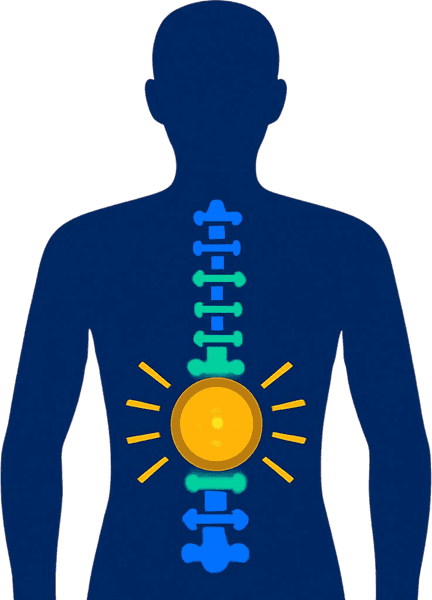
“Low back pain” describes a location, not a diagnosis. Unlike sciatica which involves an irritated nerve shooting pain down the leg, standard low back pain usually stems directly from the muscles, joints, ligaments, or discs of the spine itself.
Common Symptoms
Common Causes
02 — Evaluation
How We Evaluate the Root Cause
Because different spinal issues often feel the same, a targeted exam pinpoints the exact cause:
- Health History & Screening: We discuss how the pain started and immediately screen for warning signs (such as numbness in the saddle area or bowel/bladder changes) that require immediate medical referral.
- Movement & Exam: We evaluate posture, walking gait, and spinal range of motion to see what triggers your discomfort.
- Orthopedic & Nerve Tests: Gentle, targeted stress tests help distinguish between muscle spasms, facet joint irritation, and SI joint dysfunction, while checking baseline reflexes and strength.
When imaging or an outside referral makes sense
Note on Imaging: Most mechanical back pain improves steadily with conservative care and doesn’t need immediate X-rays or MRIs unless red flags, severe trauma, or persistent non-responsiveness are present. Among patients with acute low back pain, spinal manipulation therapy (spinal adjustments) was associated with modest improvements in pain and function at up to 6 weeks, with transient minor musculoskeletal harms. JAMA, 317, 1451.
03 — Treatment Options
Care built around what the exam finds
Effective care that matches the tissue that is causing the discomfort.
Chiropractic adjustment
Restores normal motion to restricted spinal and pelvic joints.
Therpeutic exercises
Strengthens stabilizing muscles to protect the spine and prevent recurrences.
Spinal decompression
Gently decompresses spinal discs to relieve pressure and facilitate healing.
Massage therapy
Releases chronic muscle guarding and improves local blood flow.
Acupuncture
Calms localized inflammation and relieves deep muscle trigger points.
Home & self-care
Activity modification, ice or heat, and gradually returning to normal movement — extended bed rest tends to slow recovery.
Paige, N. M., Miake-Lye, I. M., Booth, M. S., et al. (2017). Association of Spinal Manipulative Therapy With Clinical Benefit and Harm for Acute Low Back Pain. JAMA, 317, 1451. https://doi.org/10.1001/jama.2017.3086 Cited by: 378
Questions We Often Hear
Generally not, beyond the first day or so. Staying as active as symptoms allow — walking, gentle movement — tends to speed recovery more than extended rest, which can lead to stiffness and deconditioning.
For most mechanical low back pain, we give conservative care a real trial — typically a few weeks — before imaging enters the conversation, unless red-flag symptoms are present from the start.
Often yes, for the right presentation — many disc-related cases respond well to conservative care, including adjustments and decompression. The exam is what determines whether that’s the right fit for your specific case.
Usually, within reason. Which movements to favor or avoid depends on your specific pattern — we’ll point you toward what fits your presentation rather than a blanket yes or no.
A strain typically stays local, eases somewhat with rest, and improves over days to weeks. Pain that doesn’t ease with any position, wakes you at night, or comes with fever, weight loss, or leg symptoms warrants a closer look — that’s exactly what the exam and history are designed to sort out.
Most plans are built to resolve the current episode and build enough strength and mobility to prevent it from recurring — not an indefinite schedule. Ongoing or maintenance care is a separate conversation, based on how you respond and what your goals are.
Ready When You Are
Ready To Feel Better
Our team is here to help you move better, feel better, and live healthier