
A traditional technique, used as a modern tool for pain.
Traditional Chinese medicine using thin needles to reduce inflammation and modulate pain, used alongside the rest of your treatment plan.
01 — The Basics
What acupuncture is used for here
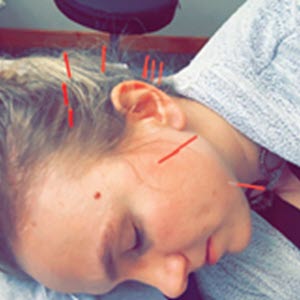
Acupuncture involves inserting very thin, sterile needles at specific points to help modulate pain signaling and reduce local inflammation. We use it primarily as an adjunct alongside chiropractic care, physical therapy, or massage.
How does it work?
Fine needles are placed at targeted points and left in place for a period of rest, typically 15 to 25 minutes, which many patients find deeply relaxing.
What’s it used for?
Chronic pain, muscle tension, headaches, and stress-related tension patterns are the most common reasons patients add acupuncture to their plan.
02 — Your Visit
What a session looks like
We use acupuncture as one part of a broader treatment plan, not a stand-alone replacement for addressing the underlying issue.
Initial conversation
We review your symptoms and where acupuncture fits alongside your broader treatment plan.
Needle placement
Fine needles are placed at targeted points and left in place for a period of rest.
How it feels
Most patients feel little to no discomfort on insertion, and many describe the session itself as deeply relaxing.
Does acupuncture hurt?
Needles are extremely thin, and most patients feel only a brief pinch, if anything, on insertion.
03 — Where It Helps
Conditions acupuncture is commonly used for
Acupuncture works best as part of a coordinated plan — used alongside adjustments, therapy, or massage rather than in place of them.
Chronic pain
Used for pain that hasn’t fully responded to other conservative care.
Muscle tension
Addressing tight, guarded muscles alongside the underlying mechanical issue.
Headaches & jaw tension
Used as an adjunct for tension-related headache and jaw patterns.
Nerve-related pain
Supporting pain modulation in cases involving nerve irritation.
Stress-related tension
Addressing the physical tension that often builds up with stress.
Disc & joint recovery
Used as an adjunct during recovery from a disc or joint injury.
04 — Safety
Is acupuncture safe for me?
Acupuncture performed with sterile, single-use needles carries a low risk of side effects, most commonly minor bruising at the needle site.
Check with your doctor first if you have
- A bleeding disorder or are on blood thinners
- A pacemaker or other implanted electronic device
- An active skin infection near a treatment area
- Are in the first trimester of pregnancy
Let us know before your session if you have
- A needle phobia or significant anxiety about needles
- A metal allergy or sensitivity
- A compromised immune system
A visit with us is appropriate if
- Chronic pain that hasn’t fully responded to other care
- Muscle tension or stress-related tightness
- You’re already receiving related care with us and want an adjunct
Questions We Often Hear
Needles are extremely thin, and most patients feel only a brief pinch, if anything, on insertion.How many sessions before I notice a difference?Is acupuncture covered by insurance?Can I combine acupuncture with chiropractic care?Is acupuncture safe if I’m on medication?What should I do before a session?
Some patients notice a change after one session, but a short series of visits is typically needed to judge whether it’s helping your specific case.
Coverage varies by plan — our team can help you check your specific benefits before you begin.
Yes — many patients use both, with acupuncture supporting pain modulation while adjustments address the underlying joint motion.
Usually, but let us know your full medication list, especially blood thinners, before your first session.What should I do before a session?
Ready When You Are
Ready To Feel Better
Our team is here to help you move better, feel better, and live healthier